


Check Valve Manufacturer in China
High-quality check valves offering reliable backflow protection, optimized performance, and fast, cost-effective global supply.
Check Valve — Quick Answer, Selection & Buying Guide (2026)
⚡ Quick Answer (What & Why It Matters)
- Main function: Prevent backflow automatically
- How it works: Opens with forward pressure, closes on reverse
- No power needed: Fully automatic operation
- Best use: Protect pumps, pipelines, and equipment
- Result: Safer system + reduced damage risk
⚙️ Types (Choose Based on Application)
- Swing: Low pressure loss (water systems)
- Ball: Best for dirty or solid fluids
- Lift: Strong sealing for high pressure
- Dual Plate: Fast closing, industrial use
- Tip: Faster closing reduces water hammer
📌 How to Select the Right Valve
- Fluid Type: Clean, gas, or contaminated
- Pressure & Temp: Must match system limits
- Flow Behavior: Velocity affects performance
- Valve Size: Impacts closing speed
- Installation: Check orientation & space
💰 Buying Factors & Price Drivers
- Material: Stainless = higher cost, more durability
- Size: Larger valves increase cost
- Pressure Rating: High pressure = stronger design
- Design Type: Advanced designs cost more
- Tip: Focus on lifecycle cost, not just price
Are you facing problems like backflow, system damage, or unexpected shutdowns in your pipeline? These issues are common in industrial systems where fluid must move in one direction, and even a small reverse flow can cause serious operational risks.
In most cases, the solution is selecting the right check valve that matches your system conditions. A check valve works automatically to prevent reverse flow, protecting pumps, pipelines, and equipment without the need for manual control. However, choosing the correct type, material, and size is critical for reliable performance and long-term safety. In this guide, you will learn how check valves work, how different types compare, what affects pricing, and how to select the right solution step by step.
As a trusted check valve manufacturer in China, VALVERNO Industrial Valve Manufacturer in China provides reliable valve solutions with consistent quality and practical engineering support for industrial applications.
Continue reading to explore clear and practical insights, and confidently choose the right check valve for your project.
Get technical guides and specs for gate valve selection.

What Is a Check Valve and How Does It Work?

A check valve is a self-operating device that allows fluid to flow in one direction while automatically blocking reverse flow. It works without electricity, actuators, or control systems.
Quick Answer
A check valve opens when upstream pressure is higher and closes automatically when flow stops or reverses.
How It Works (Simple Explanation)
- Fluid flows forward → valve opens
- Flow slows or reverses → valve closes
- Backflow is prevented → system stays protected
The key concept here is pressure difference. When pressure on the inlet side becomes lower than the outlet side, the valve shuts.
Key Engineering Characteristics
- Operates automatically (no external control)
- Responds quickly to flow changes
- Protects equipment from reverse flow
- Not designed for flow regulation
Important: Gate valves are designed for on/off operation only. Using them for flow control (throttling) can cause vibration and internal damage.
💡 PRO TIP
Types of Check Valves Explained (Swing, Ball, Lift, Dual Plate)
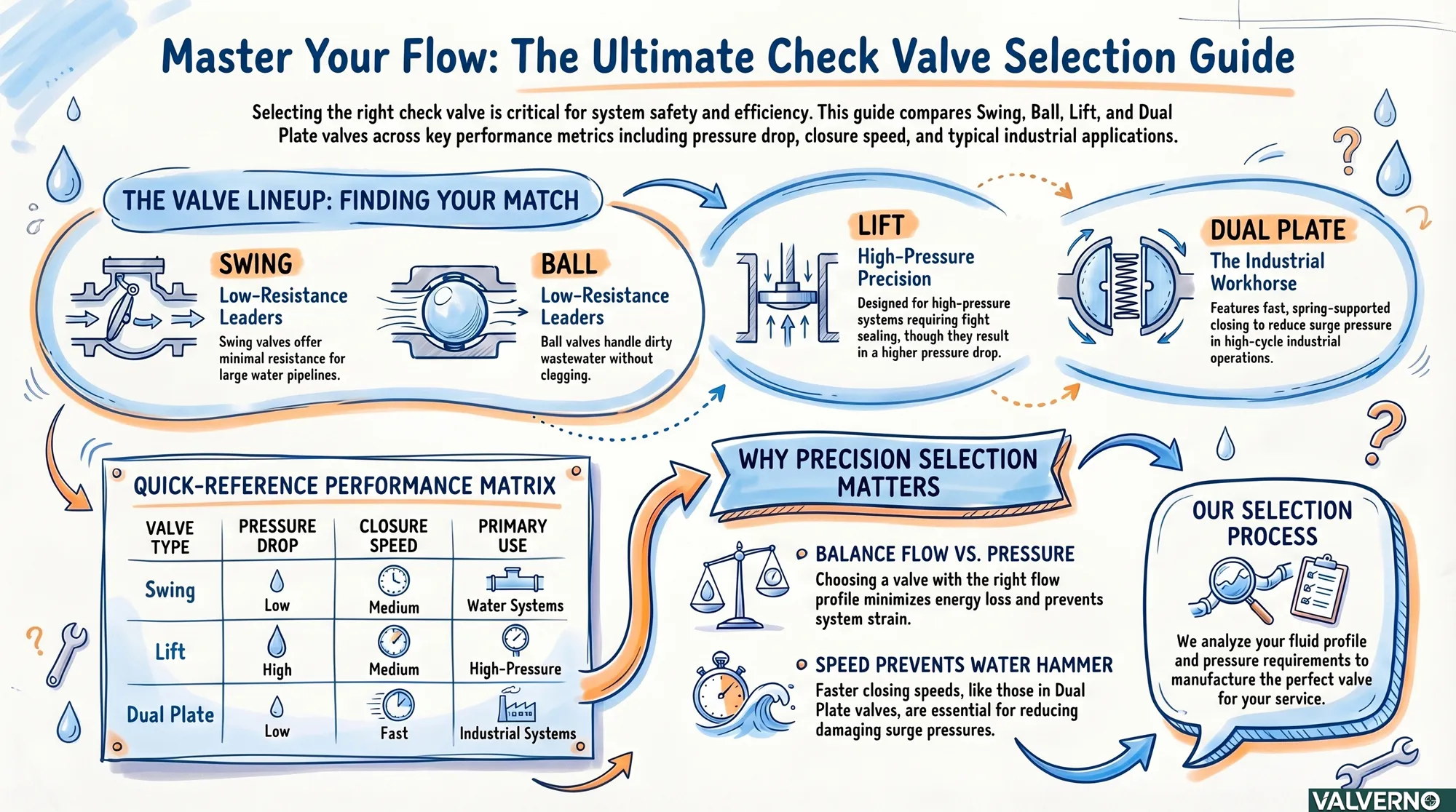
Choosing the right type is critical because it affects pressure drop, flow behavior, and system safety.
Main Check Valve Types
| Type | Flow Profile | Pressure Drop | Closure Speed | Typical Use |
|---|---|---|---|---|
| Swing | Full bore | Low | Medium | Water systems |
| Ball | Non-linear | Low–Medium | Slow | Wastewater |
| Lift | Restricted | High | Medium | High-pressure |
| Dual Plate | Split flow | Low | Fast | Industrial systems |
How Each Type Performs
Swing Check Valve
- Offers minimal resistance to flow
- Ideal for large pipelines
- Slower closing may cause water hammer
Ball Check Valve
- Handles dirty or solid-filled fluids
- Less risk of clogging
- Slower response time
Lift Check Valve
- Provides tight sealing
- Works well under high pressure
- Causes higher pressure drop
Dual Plate Check Valve
- Fast closing with spring support
- Reduces surge pressure
- Suitable for high-cycle operations
Faster closing valves help reduce system shock and pressure spikes.
💡 PRO TIP
Check Valve vs Non-Return Valve: Are They the Same?
Are They Different?
No. From an engineering perspective, both terms describe the same device.
Terminology Comparison
| Term | Usage Context |
|---|---|
| Check Valve | Industrial / ANSI |
| Non-Return Valve | ISO / global usage |
| One-Way Valve | Informal / general |
Key Point
The name does not matter the specifications do. Always focus on:
- Valve type
- Pressure rating
- Material
- Flow direction
Check Valve Materials, Sizes, and Pressure Ratings
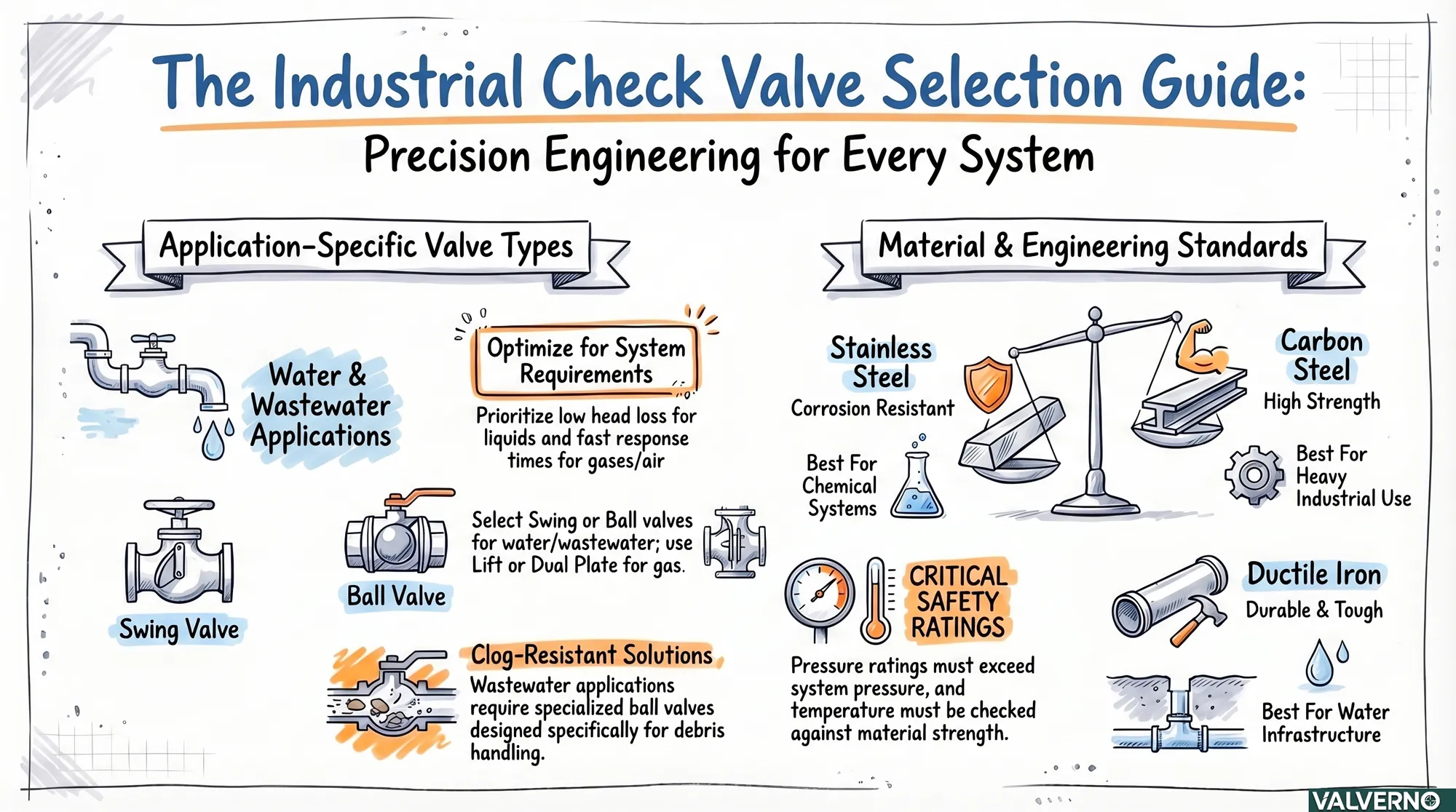
Material selection directly affects durability, safety, and compatibility with the fluid.
Common Materials
| Material | Key Property | Best For |
|---|---|---|
| Stainless Steel | Corrosion resistant | Chemical systems |
| Carbon Steel | High strength | Industrial use |
| Ductile Iron | Durable & tough | Water infrastructure |
| PVC | Chemical resistant | Low-pressure systems |
Important Selection Factors
- Pressure rating must exceed system pressure
- Temperature impacts material strength
- Valve size affects response time and inertia
Larger valves take longer to close, which can impact system safety in fast-flow conditions.
💡 PRO TIP
Common Check Valve Types for Water, Air, and Industrial Systems
Different fluids require different valve behavior. Choosing the wrong type can lead to performance issues.
Application-Based Selection
| System | Recommended Type | Key Requirement |
|---|---|---|
| Water | Swing | Low head loss |
| Wastewater | Ball | Debris handling |
| Gas / Air | Lift | Fast response |
| Industrial | Dual Plate | Stability & durability |
Why This Matters
- Liquids → focus on smooth flow
- Gases → need fast response
- Dirty fluids → require clog-resistant design
How to Choose the Right Check Valve for Your Project
Selecting a check valve is not just about size it requires understanding your system conditions.
Step-by-Step Selection Guide
- Identify the fluid type
- Clean or contaminated
- Liquid or gas
- Define operating conditions
- Pressure range
- Temperature
- Evaluate flow behavior
- Velocity
- Flow stability
- Choose valve type
- Based on response speed and application
- Confirm installation requirements
- Orientation
- Space limitations
Selection Factors Overview
| Parameter | Why It Matters |
|---|---|
| Fluid Type | Determines valve design |
| Pressure | Controls operation range |
| Velocity | Affects valve stability |
| Temperature | Impacts material choice |
| Orientation | Influences performance |
Oversized valves may not fully open, leading to vibration and early wear.
💡 PRO TIP
Check Valve Price Guide: What Affects Cost and Selection in 2026
Check valve pricing depends on multiple engineering and production factors.
Main Cost Drivers
| Factor | Impact Level |
|---|---|
| Material | High |
| Size | High |
| Pressure Rating | High |
| Design Complexity | Medium–High |
| Certification | Medium |
What Affects Cost the Most?
- Stainless steel costs more than ductile iron
- Larger valves require more material and machining
- High-pressure designs need stronger construction
- Advanced designs increase manufacturing complexity
Always consider total lifecycle cost, not just purchase price. A cheaper valve may lead to higher maintenance or downtime.
💡 PRO TIP
How to Choose a Reliable Check Valve Manufacturer in China?
Selecting the right supplier is just as important as choosing the valve itself.
Supplier Evaluation Checklist
| Criteria | Why It Matters |
|---|---|
| Certifications | Confirms product quality |
| QA/QC System | Ensures consistency |
| Production Capacity | Supports large orders |
| Lead Time | Keeps projects on track |
| Technical Support | Helps with customization |
What to Look For
- Strong material traceability
- Precise machining capability
- Clear technical communication
- Ability to meet international standards
Practical Tips
- Always verify technical specifications before ordering
- Confirm pressure and material compliance
- Evaluate how well the supplier understands your application
Check valves play a critical role in protecting systems from reverse flow. The right selection improves performance, reduces risk, and lowers long-term costs.
By understanding valve types, materials, and application needs, you can make smarter engineering and purchasing decisions with confidence.
Answered
What is a check valve and how does it work?
A check valve is a self-operating device that allows fluid to flow in one direction only. It opens when upstream pressure is higher and automatically closes when flow stops or reverses, preventing backflow.
Why is choosing the right check valve type important?
Choosing the right type affects pressure drop, flow behavior, and system safety. The correct valve ensures stable performance and reduces risks like water hammer or pressure spikes.
What is the difference between a check valve and a non-return valve?
There is no functional difference both terms describe the same device. The name varies by region, so focus on specifications like pressure rating, material, and valve type.
How do you select the right check valve for your system?
Start by identifying the fluid type, pressure, and temperature. Then evaluate flow behavior and choose a valve type that matches your application and installation conditions.
What factors affect check valve performance and durability?
Key factors include material, pressure rating, temperature, and valve size. Proper selection ensures longer lifespan, better compatibility, and reliable protection against reverse flow.
What determines the cost of a check valve?
Cost mainly depends on material, size, pressure rating, and design complexity. Higher-quality materials and high-pressure designs increase price but improve long-term reliability and reduce maintenance.