


PVC Valve Manufacturer in China
Reliable PVC Valve Manufacturer in China Delivering Durable, Corrosion-Resistant and Cost-Effective Solutions
PVC Valve — Quick Answer, Selection & Buying Guide (2026)
⚡ Quick Answer (What & When to Use)
- Main function: Control or stop flow in corrosion-prone systems
- Best for: Water treatment, chemicals, irrigation, HVAC
- Main advantage: Corrosion-resistant + low cost
- Why choose PVC: Lightweight, easy installation, low maintenance
- Limit: Not suitable for high temperature or high pressure
⚙️ Types (Choose Based on Application)
- Ball Valve: Fast shutoff with tight sealing
- Butterfly Valve: Best for large pipelines
- Check Valve: Prevents reverse flow automatically
- Diaphragm Valve: Ideal for aggressive chemicals
- Tip: Match valve type with flow function
📌 How to Select the Right Valve
- Fluid Type: Water, chemical, slurry, or air
- Material: PVC-U (standard), CPVC (high temp), PPH (chemical)
- Pressure Rating: PN10, PN16, or SCH80
- Connection: Threaded, socket, or flanged
- Operation: Manual or automated (electric/pneumatic)
💰 Buying Factors & Price Drivers
- Material Type: CPVC & PPH cost more than PVC-U
- Size: Larger valves increase cost
- Pressure Rating: Higher class = stronger design
- Actuation: Automated valves cost significantly more
- Tip: PVC reduces maintenance cost over time
Are you trying to choose the right PVC valve for your piping system, but worried about corrosion, leakage, or high maintenance costs? This is a common issue in water treatment, chemical handling, and industrial pipelines where the wrong material can quickly lead to performance problems.
In many cases, PVC valves provide a simple and reliable solution. They are lightweight, resistant to corrosion, and cost-effective for a wide range of applications. However, choosing the right type and design still requires a clear understanding of your system conditions. In this guide, you will learn how PVC valves work, how different types compare, what affects pricing, and how to select the right option step by step.
As a trusted PVC valve manufacturer, VALVERNO Industrial Valve Manufacturer in China provides reliable valve solutions with consistent quality and practical engineering support for industrial and utility applications.
Continue reading to explore clear and practical insights, and confidently choose the right PVC valve for your project.
Get technical guides and specs for PVC Valve selection.

What Are PVC Valves and How Do They Work?

PVC valves are flow control devices made from polyvinyl chloride (PVC). They are used to control, stop, or direct fluid flow inside pipelines.
Quick Answer
PVC valves regulate fluid movement using internal components such as balls, discs, or diaphragms, and they are widely preferred for their corrosion resistance and low cost.
How PVC Valves Work
PVC valves operate through internal mechanisms that control flow:
- Ball valves use a rotating ball to open or close flow
- Butterfly valves use a pivoting disc
- Diaphragm valves rely on a flexible membrane
These valves can be operated in two main ways:
- Manual control (handle or lever)
- Automated control (electric or pneumatic actuators)
Why PVC Valves Are Efficient
- Low friction → smoother flow
- Reduced pressure loss → better system efficiency
- Strong chemical resistance → longer lifespan
Types of PVC Valves Explained (Ball, Butterfly, Check & More)
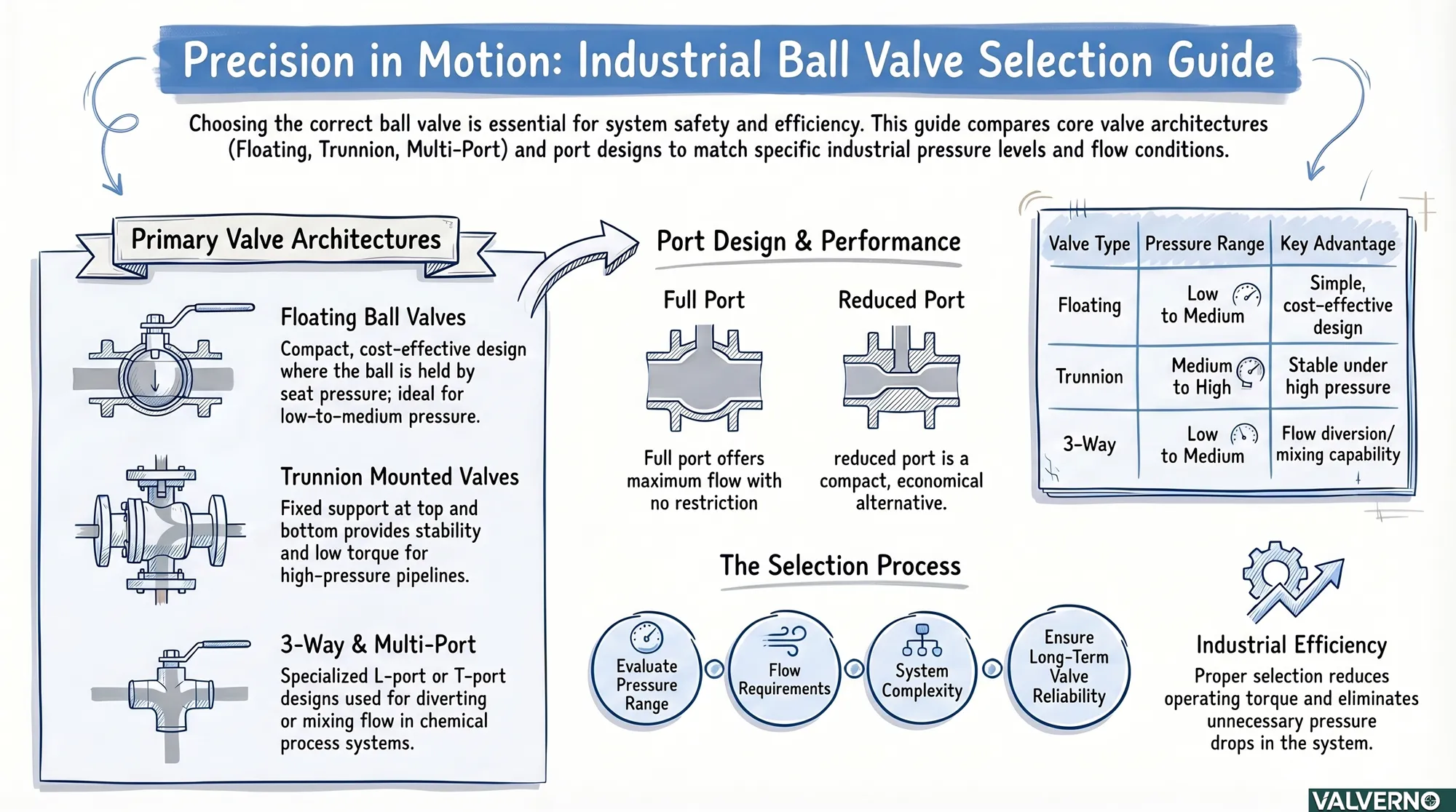
PVC valve manufacturers offer several types to match different system needs.
Main PVC Valve Types
- Ball Valve
Fast shut-off with tight sealing - Butterfly Valve
Compact and ideal for large pipelines - Check Valve
Prevents reverse flow automatically - Diaphragm Valve
Best for aggressive or slurry fluids - Foot Valve
Protects pumps from dry running
PVC Valve Comparison Table
| Valve Type | Function | Best Use Case | Advantages | Limitations |
|---|---|---|---|---|
| Ball Valve | On/Off control | Water, chemical pipelines | Tight sealing, simple design | Not ideal for throttling |
| Butterfly Valve | Flow regulation | Large pipes, HVAC | Lightweight, space-saving | Lower sealing precision |
| Check Valve | Prevent backflow | Pumps, wastewater systems | Automatic operation | Flow resistance |
| Diaphragm Valve | Precise control | Chemical/slurry systems | High chemical resistance | Limited pressure range |
| Foot Valve | Pump protection | Irrigation systems | Prevents dry running | Installation dependent |
PVC Valve Price Guide: Factors That Affect Cost and How to Estimate Pricing in 2026
Understanding pricing helps you control project costs without sacrificing quality.
What Affects PVC Valve Prices?
- Material type (PVC-U, CPVC, PPH)
- Valve size (DN15–DN400)
- Pressure rating (PN10, PN16, SCH80)
- Connection type (threaded, socket, flanged)
- Actuation type (manual or automated)
- Certifications (ISO, ANSI, DIN, NSF)
Estimated Price Range
| Valve Type | Size Range | Price Range (USD) |
|---|---|---|
| Ball Valve | 1/2″ – 4″ | $2 – $50 |
| Butterfly Valve | 2″ – 12″ | $20 – $200 |
| Check Valve | 1″ – 8″ | $10 – $150 |
| Actuated Valve | 1″ – 6″ | $150 – $600+ |
Ordering in bulk from a reliable PVC valve manufacturer in China can reduce costs by 20–40%.
💡 PRO TIP
What Are PVC Valves Used For? Key Applications in Water Treatment, Chemical and Industrial Systems

PVC valves are widely used across industries due to their flexibility and durability.
Key Applications
- Water treatment and desalination
- Chemical processing systems
- Agricultural irrigation
- Swimming pools and HVAC systems
- Industrial manufacturing pipelines
Application vs Valve Selection
| Industry | Recommended Valve Type | Key Requirement |
|---|---|---|
| Water Treatment | Ball / Butterfly | Corrosion resistance |
| Chemical Industry | Diaphragm / Ball | Chemical compatibility |
| Agriculture | Foot / Ball | Low pressure durability |
| HVAC Systems | Butterfly | Compact design |
| Industrial Plants | All types | Reliability |
PVC Ball Valve vs Other Valve Types: Differences, Advantages and Use Cases
PVC ball valves are one of the most commonly used options.
Key Differences
| Feature | Ball Valve | Butterfly Valve | Diaphragm Valve |
|---|---|---|---|
| Operation | 90° rotation | Disc rotation | Flexible membrane |
| Sealing | Excellent | Moderate | High |
| Flow Control | On/Off | Throttling | Precise control |
| Maintenance | Low | Low | Medium |
PVC Valve Materials, Sizes and Pressure Ratings: A Complete Guide
PVC valves come in different materials and technical standards.
Common Materials
- PVC-U → Standard applications
- CPVC → Higher temperature resistance
- PPH → Strong chemical resistance
Technical Specifications
| Parameter | Range / Standard |
|---|---|
| Size Range | DN15 – DN400 (1/2″–16″) |
| Pressure Rating | PN10 / PN16 / SCH80 |
| Temperature Limit | Up to 60°C (PVC-U) |
| Connection Types | Threaded, Socket, Flanged |
| Standards | ANSI, DIN, ISO, JIS |
How to Choose the Right PVC Valve for Your Application (Step-by-Step Guide)
Choosing the correct valve is critical for system performance.
Step-by-Step Selection Guide
- Identify the fluid type (water, chemical, slurry)
- Check pressure and temperature conditions
- Select the valve type (ball, butterfly, etc.)
- Ensure material compatibility
- Choose the right connection type
- Decide between manual or automated operation
Always match the valve material with the fluid to avoid long-term damage.
💡 PRO TIP
How to Choose a Reliable PVC Valve Manufacturer in China: Key Factors to Consider
Selecting the right supplier ensures consistent quality and performance.
Key Factors to Evaluate
- Manufacturing experience (preferably 10+ years)
- Certifications (ISO, CE, NSF)
- Full product testing before delivery
- OEM/ODM customization capability
- Global export experience
A professional manufacturer should also provide:
- Engineering support
- Stable delivery timelines
- Strict quality control systems
Answered
What are PVC valves and how do they work?
PVC valves are flow control devices made from polyvinyl chloride that regulate fluid in pipelines. They use internal parts like balls, discs, or diaphragms to open, close, or direct flow efficiently.
Why are PVC valves a good choice for industrial piping systems?
PVC valves are lightweight, corrosion-resistant, and cost-effective. They reduce pressure loss, improve flow efficiency, and require low maintenance in water, chemical, and industrial applications.
What types of PVC valves are available and where are they used?
Common types include ball, butterfly, check, and diaphragm valves. Each is designed for specific uses like shut-off control, flow regulation, backflow prevention, or handling aggressive fluids.
What factors affect the price of PVC valves?
PVC valve prices depend on material type, size, pressure rating, connection type, and actuation method. Certifications and bulk ordering can also impact overall cost significantly.
What industries commonly use PVC valves?
PVC valves are widely used in water treatment, chemical processing, agriculture, HVAC systems, and industrial pipelines. Their corrosion resistance makes them ideal for handling fluids safely.
How do you choose the right PVC valve for your application?
Start by identifying fluid type, pressure, and temperature, then select the right valve type and material. Ensure compatibility and choose proper connection and operation method for long-term performance.